The 35+ rule micro-semantics checklist
Subject anchoring, entity salience, POS calibration, lexical bridging, contextual vector alignment, and more, the full 35+ rule system, applied to every single article without exception.
 Muhammad Osama
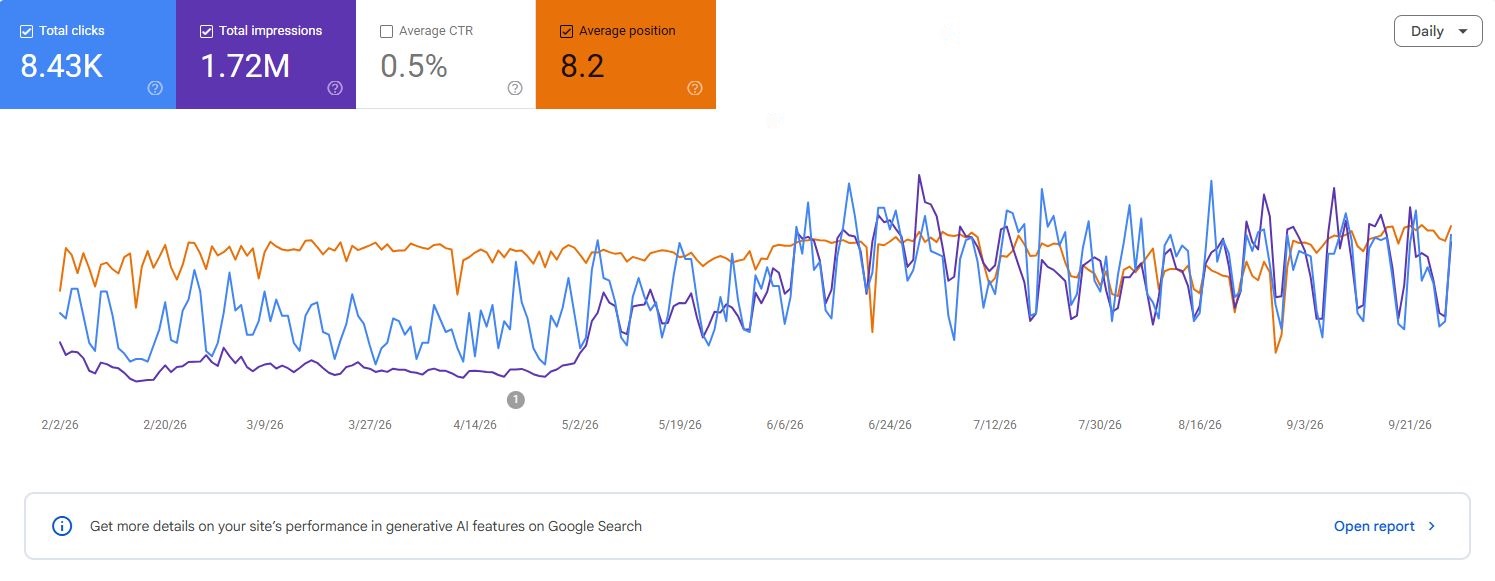
A guides-and-resources site for the GoHighLevel ecosystem, built with a disciplined micro-semantics content system: 35+ rules, applied to every article. Most pages now sit immediately behind GoHighLevel’s own pages, and daily clicks grew from 10–15 to 60–70.
The goal: become the independent educational resource for the GoHighLevel ecosystem, starting from 10–15 clicks a day.
The GoHighLevel SERP is vendor territory. Official documentation and first-party pages dominate, backed by a level of trust no third-party site can match, and beneath them sits a dense field of affiliate sites chasing the same commissions.
For a small educational site, that reality sets the winning position: you don’t beat the official domain; you rank immediately behind it, which is exactly where searchers looking for independent explanations, real-world how-tos, and unbiased context actually click. Getting there meant competing on per-page content quality with no authority to spare, which is precisely where a strict micro-semantics system earns its keep:
Content written regularly against the full micro-semantics system, disciplined enough to apply to every article and strong enough to rank with.
Subject anchoring, entity salience, POS calibration, lexical bridging, contextual vector alignment, and more, the full 35+ rule system, applied to every single article without exception.
Guides and resources shipped on a steady rhythm, each one checklist-grade. The consistency let rankings compound across the whole cluster instead of spike-and-fade per article.
Content organized around the GoHighLevel entity lattice, features, workflows, terminology, and comparisons, so every article reinforces the site’s claim on the topic as a whole.
The official site documents the product; it doesn’t teach it. Independent how-tos, plain-language explanations, and practical resources occupied the space the vendor leaves open.
For most of the site’s pages, the position is now directly behind GoHighLevel’s own.
The outcome validates the full system:
In a SERP where the #1 position belongs to the platform’s own documentation by default, consistently holding the next position across the guide set is the strongest result an independent resource can achieve, and it compounds: every new checklist-grade article reinforces the cluster’s overall authority.
Reading the screenshot below: it reports the site’s overall Search Console performance across the full window, including the lower-volume months before the guides matured. Its average position (8.2) is a site-wide average across every query the domain ranks for, not the position of the target guides, which sit directly behind GoHighLevel’s own pages. The 60–70 daily clicks are the current run-rate; the chart average spans the earlier, smaller period.
35+ micro-semantic rules applied to every article outperform a partial checklist used occasionally. Consistency is what turns the framework into compounding rankings.
Directly behind the official domain is where independent searchers convert, and it’s winnable when per-page quality is engineered deliberately.
A steady cadence of checklist-grade articles beat sporadic deep dives. Rankings accumulated across the cluster as the system held.
Teaching the ecosystem, not selling it, earns the trust and entity signals that promotional pages can’t buy.