An exact-match domain that earned #1 by aligning with the system.
EMDs start with a trust deficit: search systems treat them as a potential spam pattern until a page proves genuine quality. Instead of trying to outsmart that prior, this project aligned with it, zero spammy practices, one landing page engineered to satisfy intent, entities, and quality signals. The result was the #1 position for its high-value, high-intent target keyword.
The target was a high-value, high-intent, competitive keyword, and the site’s domain was that keyword, exactly.
The site is an exact-match domain, its domain is its keyword. For a high-value, high-intent commercial query, that looks like an asset on paper. In practice it starts as a liability: search systems treat EMDs with default skepticism, because exact-match domains are a classic spam pattern. The domain is not trusted until a genuinely high-quality page proves it deserves to be.
So the real competition wasn’t only the established brands already sitting on page one for an expensive keyword. It was the system’s default skepticism toward the domain itself. The page had to do two jobs simultaneously:
Outrank the incumbents, established industry sites that users and search engines already trust for this query.
Align with the quality systems, satisfy the trust, relevance, and quality evaluation every EMD faces until its page proves itself. Not by gaming the filters, by removing every reason to distrust the page.
02The Work
Visual Semantics, applied to one page.
The Visual Semantics framework layered on top of regular semantic SEO, with the optimization effort concentrated primarily on the landing page.
Visual layer
The Visual Semantics framework
The page’s visual structure mirrors its semantic structure: entity-first headings, sections mapped to the query’s intent in reading order, and image–text alignment so every visual reinforces the same entity signals the text carries.
Semantic layer
Core semantic SEO
Standard entity–attribute–relation work underneath: the target entity and its attributes explicitly disambiguated, supporting terms and must-answer questions covered comprehensively around the money page.
Asset focus
Landing-page-first optimization
Optimization effort concentrated primarily on the landing page: above-the-fold intent satisfaction, section-level query mapping, and internal links routing topical authority directly into it.
Quality proof
Aligning with the quality systems
Default EMD skepticism lifts when a page proves real quality. This page was engineered to align with the quality and spam evaluation: original value, clear purpose, complete depth, and zero manipulation. The system wasn’t beaten; it was given every reason to prefer the page.
03The Results
#1, ahead of established brands.
The EMD now holds the top position for its target keyword, with the domain’s default trust deficit fully resolved.
Target keyword position
#1
Result type
EMD outranking incumbents
Frameworks applied
Visual Semantics + semantic SEO
Primary asset
One optimized landing page
1Client site, exact-match domainTarget keyword
2Established industry publicationPreviously ahead
3Major marketplace listingHigh authority
4Review & comparison platformAggregator
Once the page aligned with the system’s quality signals, the EMD stopped being a liability and became what it always looked like on paper: the most relevant domain on the internet for that query.
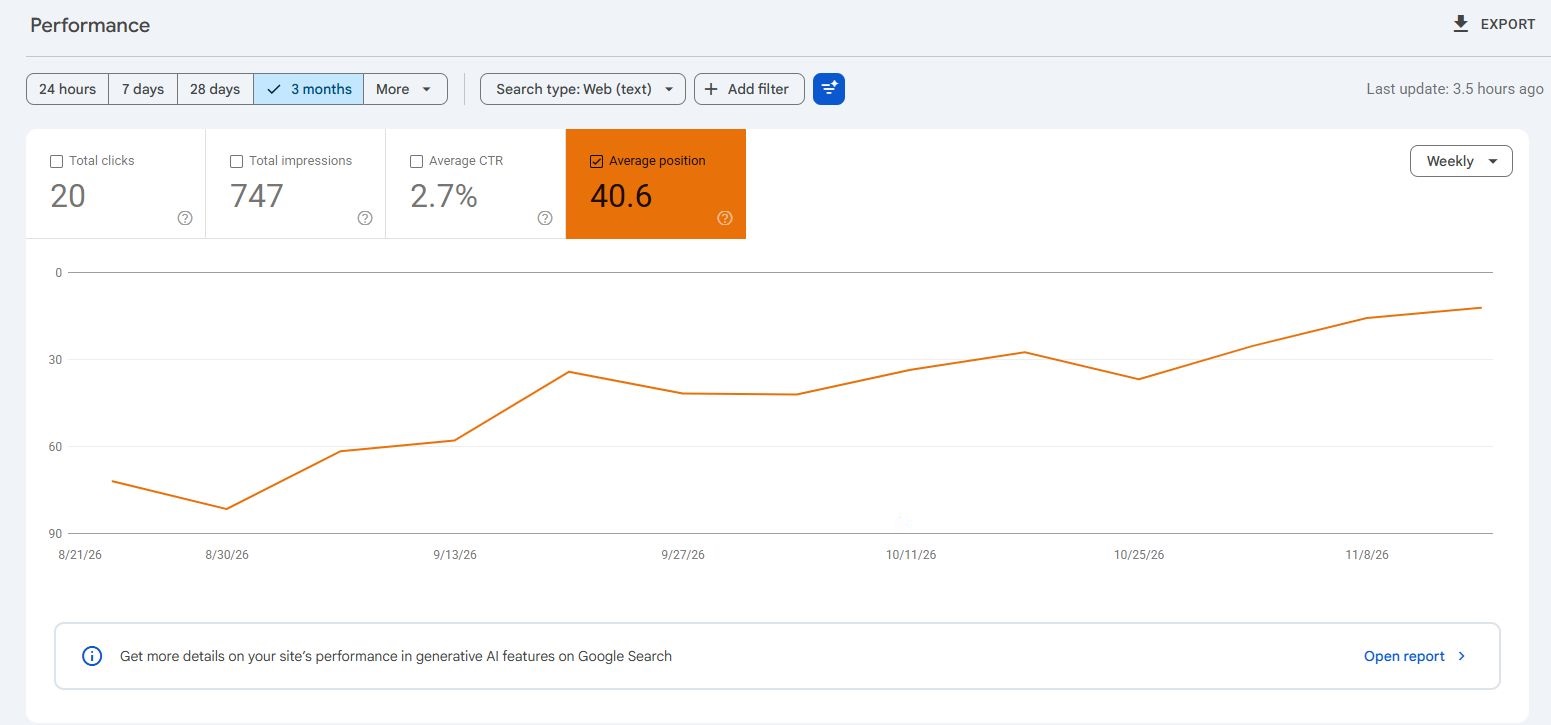
One reading note on the screenshot below: it shows the site-wide average position across the entire measured window. The climb began near position 90, so that average is unavoidably dragged down by the early months, a mid-range number is expected even though the target keyword now sits at #1. Read the trend of the line, not the headline average.
Search Console · Site average position (full growth window)
Figure 01 · Search Console, site-wide average position across the full climb (starts near position 90)
04Takeaways
What this project proves.
Takeaway 01
EMD skepticism is a prior, not a verdict
The default skepticism is conditional: align with the system’s quality signals, and it lifts. The domain name never changed, the page did.
Takeaway 02
Visual hierarchy is retrieval structure
What a page makes visually primary, NLP systems treat as semantically primary. Visual Semantics aligns the two deliberately, instead of leaving them to conflict.
Takeaway 03
One page, maximal depth
For a money keyword, a single landing page engineered end-to-end beats broad, shallow coverage scattered across many pages.
Takeaway 04
Landing pages deserve semantics too
Most semantic SEO effort goes to blog content. The highest-intent page on the site is where that engineering pays the most, treat it as the primary retrieval asset.
Your money page could be next
“A page that proves its quality can earn the system’s trust, even when the domain starts with none.”